


DPP one year on: Progress, gaps and public expectations
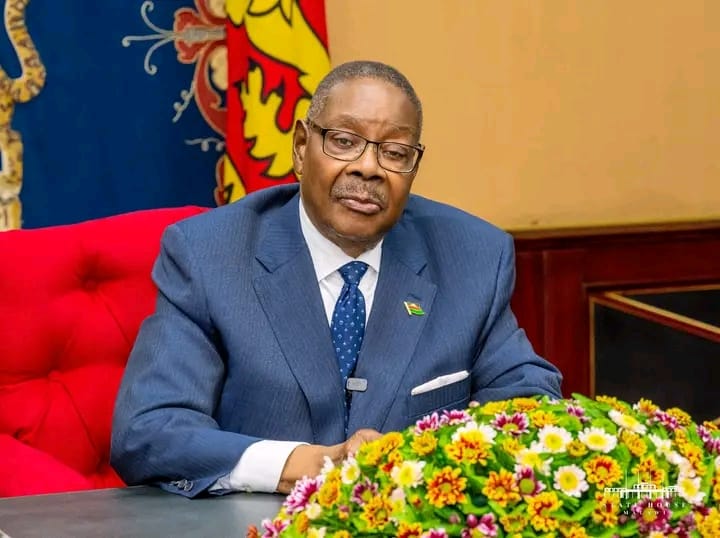
The Democratic Progressive Party (DPP) under President Peter Mutharika now clocks one year at the helm of the Malawi Government under a campaign theme, “A Return to Proven Leadership,” after winning the 16th September 2025 polls.
However, Malawi still appears at cross-roads; with some youth and child rights advocates seeing no tangible execution of some key campaign promises while governance commentator Caesar Kondowe thinks DPP’s first year is a mixed bag.
Mutharika took over from the Malawi Congress Party (MCP) having dangled not-so-cheap promises to improve livelihoods, revive the bedridden economy, increase the Constituency Development Fund (CDF) to a record K5 billion for each of the 228 constituencies and free secondary education, among others.
We scrutinize DPP’s first year of the 2025 – 2030 tenure of office by examining its achievements, challenges and voters’ expectations as it enters its second year.
Ahead of the 16th September 2025 polls, the Democratic Progressive Party (DPP), like other contesting parties, made all-sorts of campaign promises aimed at transforming the economy and improving public services delivery in order to raise the living standards of Malawians.
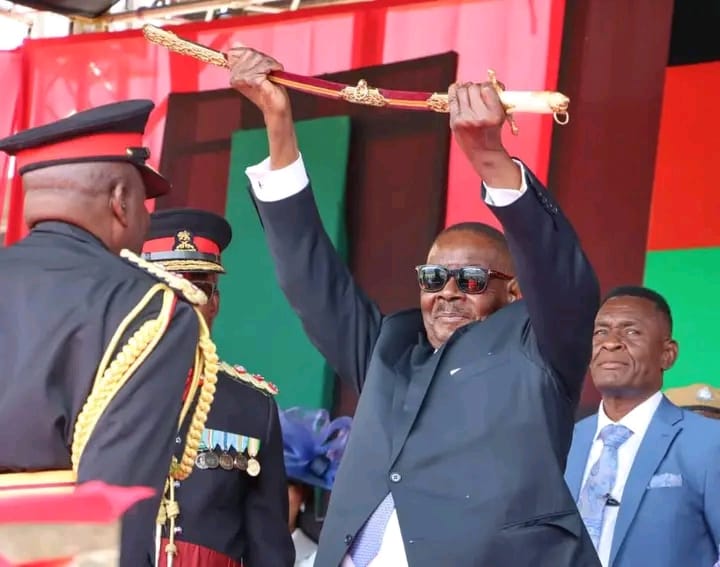
On Saturday 04th October 2025, Mutharika officially took the mantle of authority with an acceptance speech that spelt a strong shift from podium campaign promises to voter centered ground actions for the next five years.
With the first year counting, attention is now shifting between two sides of the coin; the actual performance on what has been delivered and what remains undone, as the clock is ticking.
The DPP led administration has continued to prioritise agriculture, while also strongly pledging to tackle corruption, which President Mutharika has personally and consistently identified as one of the major obstacles to national development.
But how has the government performed in all other spheres?
In a surprise turn of events, Speaker of Parliament Sameer Suleiman, who is a DPP senior member, has from some days ago attracted a backlash from his own party after announcing 12 investigations into suspected corrupt practices in some public enterprises.
The matter reached a climax with a concerned citizen Austin Mkoka, gagging Speaker Suleiman by obtaining an injunction while the DPP issued a statement distancing itself from Suleiman’s touch on the raw nerve.
On the other hand, government through the Chief Secretary Dr. Justin Saidi said in a statement on 10th September 2026 that the Speaker cannot constitute ad hoc parliamentary committees without the President.
He we quote Saidi’s statement verbatim:
“Whilst government fully appreciates oversight function of the National Assembly, members of the general public may wish to know that under Section 56 Subsection 6 of the Republican Constitution of Malawi, the power to establish Parliamentary Committees is vested in Parliament. Under Section 49 Subsection 1 of the Constitution, Parliament consists of the National Assembly and the President as Head of State. Therefore, the Speaker alone or the National Assembly cannot unilaterally constitute ad hoc Parliamentary Committee.”
However, opposition United Democratic Front (UDF) President Atupele Muluzi says Speaker Suleiman must not be a lone voice in the wilderness. He argues that Parliament is not an extension of the Executive but a separate arm of the government with constitutional responsibility to represent people, legislate and exercise oversight.
Governance commentator Caesar Kondowe describes the first year of the return of President Peter Mutharika’s administration as a mixed bag.
Kondowe observes that the DPP-led government has struggled to conclude some high-profile corruption cases despite a mushroom of arrests but credits it for making steady progress in addressing the fuel shortages and strengthening food security.
“ I would like to commend that because in terms of governance, they have done quite well because they were going to power there were number of issues that were wrong including instabilities of fuel supply and prices of food among others,” said Kondowe.
The economy, as inherited from the immediate deposed Malawi Congress Party (MCP) under its President Lazarus Chakwera, has also emerged as one of the biggest litmus tests for the DPP during this first year.
For Malawians, the real test of economic recovery is not simply what is contained in the government policies; but whether people can afford food, transport, education and other daily basic necessities.
Against this backdrop, the DPP has pursued measures aimed at strengthening public finance management, stimulating economic recovery, attracting investment and creating opportunities for the private-sector to grow.
But a billion-dollar question is: have these measures translated into meaningful improvements in uplifting socio-economic welfare of the lives of Malawians?
Malawi remains highly adored as an agriculture-based economy. However, Tobacco, Malawi’s long-time cash crop struggled on the market this year. Again, food insecurity continued to overshadow social welfare despite the subsidies.
Agriculture experts Felix Jumbe and Ronald Chilumpha says Malawi needs to rethink its approach, which include the Farm Inputs Subsidy Program (FISP), if agriculture is to move beyond simply feeding the nation and become a much-stronger engine of economic growth.
Currently, the Malawi Vulnerability Assessment Committee says 2.6 million Malawians will need food aid during the lean season running from October 2026 to March 2027 and government requires K124.3 billion to respond.
Jumbe notes that successive regimes, including the current DPP government, have largely treated agriculture as a tool for achieving food security rather than a major driver of the economy.
“All these agricultural programs are meant to be relief programs, and not agricultural programs. There s need for the government to put in place measures that would help farmers to produce enough to feed themselves and the nation at large,” said Jumbe.
On his part, Chilumpha says the current administration deserves a credit for putting in place measures aimed at ensuring that agriculture subsidies benefit deserving resource poor farmers through farmer clubs despite reducing the beneficiaries.
On youth policies, it remains a fact that young people continued to face challenges such as unemployment, limited access to finance to establish and grow their businesses and skills gaps, to cite a few.
Quota4Youth Organisation Executive Director Precious Mafunga also shares the view that DPP’s performance in the past 12 months is another mixed bag as some campaign promises on the youth largely remain on paper.
Mafunga points out increased access to secondary education through fees abolishment in public schools but calls for measures to reduce youth unemployment.
“Government has not done enough in terms of empowering the youth economically despite a lot of people voting for them on 16 September 2025,” said Mafunga.
Child rights activist Amos Chibwana rates the DPP government’s performance below average, citing what he described as gaps in child protection and coordination between government institutions and other stakeholders.

However, child rights advocate Memory Chisenga has a different point of view; saying the government has demonstrated commitment through improvements in data management systems and quick handling of cases that involved children.
“From September last year to September this year, the Ministry of Gender, Children and Social Welfare has shown commitment to child protection, however we expect government through the Ministry of scale up the forts because children continue to face various challenges,” said Chisenga,
The National Youth Council of Malawi (NYCOM) reveals that it recognizes all the challenges that young people go through and is directly engaging them countrywide. NYCOM Communications and Advocacy Officer Joseph Njoka says government has placed youth development among its priorities.
“We have put much effort on amplifying the voices of people. As NYCOM we have reached to various stakeholders so that they are part of our agenda empowering the youth in the country. We have travelled across the country to engage the youth so that they understand and embrace opportunities that are there,” said Njoka.
The Minister of Information, who is also the government chief spokesperson, Shadrick Namlomba, was out of reach for a comment on this annual performance assessment of the DPP administration.
One year into its return to power, the DPP administration presents a picture of progress in some areas, twists and turns in other critical aspects like corruption, unanswered questions, and significant expectations from Malawians.
As the DPP begins its second year in office, expectations remain high for wealth and jobs creation and eradicating the virus of food insecurity by improving productivity from small-holder farming to large scale commercial farming.
For sure, the DPP has to demonstrate that its economic recovery measures can translate into a stable economy with well managed inflation, consistent fuel supply, forex availability and improved purchasing power for low-income households.
The true measure of any government is not the number of promises it makes, but the difference those promises make in the lives of the people it governs.
Timveni Child and Youth Media Organisation uses radio and television to give a voice to Malawi's young people, especially girls, on children's rights. The organization exists to help young people in Malalwi make a difference in their own lives, create awareness about children’s rights, and build the capacity of children and young people.
- Terms and Conditions