


By Cidrick George
Early Childhood Development (ECD) is, on paper, a colorful national dream inspired by Sustainable Development Goal (SDG) number four—to provide pre-primary education to children before primary school. In reality, however, it is a sad story.
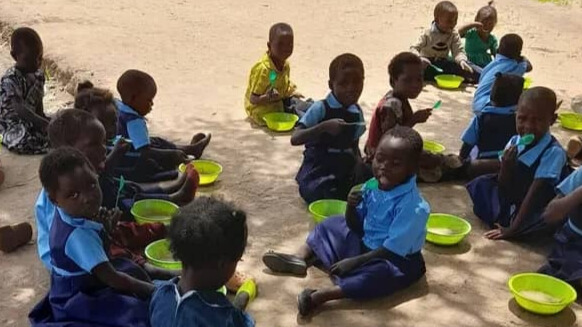
ECD centers commonly operate in dilapidated buildings, some without toilets, child-friendly classrooms, or playgrounds. Worse still, many caregivers’ pay remains a mere promise rather than reality.
National ECD Taskforce Chairperson Nase Chunga questions how K1 billion—out of the required K36 billion—can adequately meet national annual ECD needs. Meanwhile, Ministry of Gender, Children, and Social Welfare Spokesperson Pauline Simwaka concedes there are gaps and commits to professionalizing ECD.
A call to school is a call to wisdom—a pool of knowledge every person uses to navigate the world for personal development and national productivity. School is a lifelong process that begins at birth.
It is a timed process; if one misses certain steps, the impacts may not show immediately but will surface in later years.
This is truly “making hay while the sun shines.” Developing numerical and alphabetical skills in pre-primary school is a dream inspired by SDG number four, preparing children for primary education.
This is the noble work of caregivers; yet, they are often left in the cold.
One caregiver’s working conditions in Lilongwe reflect the situation of many across the country. We have named her Thandi. She works voluntarily at one of the ECD centers despite countless challenges.
“ECD work is both tiresome and a calling. We observe that this is the foundation where the public life of every learner begins. Teaching a child as young as three years who they are, and what a person is supposed to do, is not an easy task,” said Thandi.
Despite her dedication, Thandi says it is discouraging that caregivers remain unrecognized and their honorarium is unappealing. She wishes the government would start treating ECD caregivers like primary school teachers.
Reverend Nase Chunga, Chairperson of the National Taskforce on ECD, is deeply worried that the sector is not properly resourced, which negatively affects the quality of education.
He pointed out that for decades Malawi has underperformed in state funding, despite ECD being a sector requiring top-notch administrative support and national attention in line with the ECD Policy.
He questions how the allocation of K1 billion—out of a proposed annual budget of K36 billion—can adequately meet the needs of millions of Malawian children attending ECD centers.
Child rights activist Memory Chisenga believes that unless caregivers are fully motivated and well-funded, the quality of ECD will remain at its lowest profile in Malawi.
“If government headquarters at Capital Hill truly believes that children are future leaders, it will not leave them behind. Instead, it must walk the talk by financially investing in ECD promotion,” said Chisenga.
Education expert Victor Chikoti echoes Chisenga’s concern, saying Malawi cannot dream of better education with minimal investment in Early Childhood Development.
Meanwhile, social commentator Francis Liyati Phiri calls on the government to actively address well-known bottlenecks frustrating ECD, such as poor infrastructure, lack of a formal curriculum, and inadequate numbers of qualified caregivers.
He adds that government must also ensure both private and public ECD centers are well monitored and follow the same curriculum, rather than wasting children’s most critical foundational years in blame games.
Although ECD deals with pre-primary education—an equally important sector in human capital development—it is technically under the Ministry of Gender, Children, and Social Welfare. Could this be a policy defect? The Ministry of Education currently has no role in ECD.
Spokesperson Pauline Simwaka acknowledges the valuable contribution of caregivers to the pre-primary education sector and says they are collaborating with relevant authorities to professionalize ECD.
She disclosed that plans are underway to recruit caregivers and begin paying them. However, she remained silent on the implementation timeline.
If Malawi is to see all children grow into responsible citizens, ECD is the key. One may ignore whispers of concern today, but the consequences of failing to act at the right time will surely come in due course.
Malawi is among the countries globally with only five years left to fulfill the 2030 UN commitment to ensure equal access to quality Early Childhood Development and care, making significant progress in the education sector.
As the saying goes, mere talk leads to poverty. The longer the government delays, the greater the demand for modern ECD becomes, as new learners are born every day.








Leave a Reply