


EPILEPSY TRAPS CHILDREN OUTSIDE THE CLASSROOM
By Suzanna Nkhoma

For many children living with epilepsy in Malawi, the right to education crawls on a thorny path, overshadowed by deep-rooted stigma, teasing and discrimination that continuously stand between them and the classroom.
National Epilepsy Association of Malawi National Coordinator Chifundo Phiri concedes that while the government is trying to promote inclusive learning environments, ground reality confirms a different account: children with epilepsy remain displaced and socially excluded.
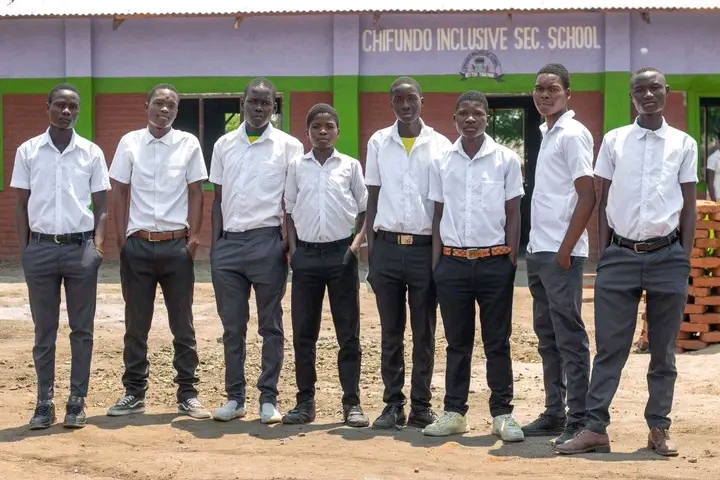
Beyond government efforts, a concerned Malawian, Chifundo Petro, who runs Chifundo Epilepsy Foundation, established Chifundo Inclusive Secondary School in Chikwawa district to provide education opportunities to 150 children with disabilities, including 75 with epilepsy.
In this Special Report, the reporter is assessing whether inclusive education commitments for children with disabilities are mere smoke screens, as some parents often single-handedly fight two worlds- misconceptions and school environments- to educate the children.
In Area 25A in Lilongwe lives Esnart Daniel, a mother of four.
Among her children is 19-year-old Bridget, whose life took a dramatic turn after she started experiencing epileptic seizures in 2007. Daniel says that despite seeking medical treatments and consultations, her daughter’s condition did not improve.
Her attempts to have Bridget attain an education were also unsuccessful after it became difficult for her to sit still because of the seizures.
Today, in 2026, Bridget spends most of her time at home, under the care of her mother and siblings. She also lives with a disability affecting her arm and leg, which her mother says has further restricted her independence and access to basic rights like education.
For Daniel, caring for a child who needs constant attention has also brought a financial burden. She says the cost of transportation to and from school became another obstacle, making formal education increasingly difficult for her daughter to access.
Bridget’s story is not unique. For Patuma Chintama, the dreams she had for her 15-year-old son Kondwani to excel academically were also disrupted when he began experiencing seizures while in Standard Five at Mvunguti Primary School.
Chintama said her son’s condition progressively worsened, with seizures occurring frequently and eventually affecting his behaviour.
She said at one point, her son became violent towards her, his brothers, neighbors and even strangers.
“He began experiencing seizures around the time he was entering standard 5, and as a result, his ability to think academically started to decline. He struggled to focus on his studies because he would often lose consciousness.,” said Chintama.
The African Journal for Disability classifies epilepsy as a disability under Malawi’s 2012 Disability Act. The condition is estimated to affect between 2.8 and 5.2 percent of Malawi’s population, with school-aged children often facing discrimination from fellow learners and educators.
The National Epilepsy Association of Malawi concedes that while the government of Malawi is making some efforts to address challenges being faced by people living with epilepsy, stigma rooted in misconceptions remains a major hurdle.
The Association’s National Coordinator, Chifundo Phiri, says that through its Champion for Change Initiative, it is engaging communities, traditional leaders, Parent-Teacher Associations, and other stakeholders to challenge misconceptions and promote inclusive learning environments.
“We are trying to reach out to the school as well as parents and the community surrounding the school, so that they are told about epilepsy so that they should help to handle such children,” said Phiri.
However, health specialist Dr. Evelyn Chapota Chilemba explains that parents should not simply be forced to send children with epilepsy to school without first considering their individual circumstances and safety. Chilemba observes that accepting a child’s condition can take time for some parents.
“Parents should ensure that children have medication every day to prevent some seizures. Additionally, there is a need for trained teachers so that they can ably help such children,” said Chilemba.
Meanwhile, Child Advocacy Center Executive Director Memory Chisenga points out attitudes and misconceptions as some of the biggest barriers that prevent children living with epilepsy from accessing quality education.

Chisenga has since called for collective efforts to challenge harmful narratives surrounding epilepsy, particularly in rural communities where awareness and access to medical services can be limited.
Malawi’s Education Act of 2013 mandates the Ministry of Education to promote education without discrimination, establish national education standards, manage the curriculum and oversee public schooling administration.
The Ministry’s Public Relations Officer Lily Kampani says the government recognizes the challenges that children living with epilepsy face in schools.
“The Ministry of Education, Science and Technology is providing Continuous Professional Development (CPD) programs on inclusive education to strengthen teachers’ capacity to identify and appropriately support learners with diverse educational needs,” said Kampani.
Beyond government efforts, the private sector and civil society are also playing a role. For example, Chifundo Epilepsy Foundation has established Chifundo Inclusive Secondary School in Chikwawa District, which provides education opportunities to learners with disabilities, including those living with epilepsy, to pursue their education.
The Foundation’s Executive Director, Chifundo Petro, says the school was established after observing gaps in inclusive education for children living with epilepsy. The school has 150 learners with disabilities, 75 of whom are living with epilepsy.
But even as such initiatives emerge, significant challenges remain outside the classroom.
The National Epilepsy Association of Malawi and DREAM Center, which provides epilepsy diagnosis and support, point out inadequate supplies of anti-seizure medication, limited diagnostic equipment and shortage of specialized neurologists as some of the challenges affecting people living with epilepsy.
For a child to consistently participate in lessons, frequent seizures need to be properly managed. This requires timely diagnosis, appropriate treatment and consistent access to medication.
According to the African Journal for Disability, commonly available anti-seizure medicines in Malawi include Phenobarbital and Carbamazepine, while medicines such as Sodium Valproate and Phenytoin have faced stock-outs.
Such shortages can have consequences beyond health, potentially affecting a child’s ability to attend school and participate fully in learning. We contacted the Ministry of Health to understand measures being taken to address shortages of anti-seizure medicines, strengthen epilepsy services and address funding gaps.
However, the Ministry had not responded by the time this report went for publication.
For children living with epilepsy, the journey to education does not end with opening a school door. It also depends on access to appropriate healthcare, supportive teachers, well-informed communities and families who are assured that their children can safely learn.
Progress may be visible, but somewhere in Malawi, there remains a child living with epilepsy who wants to go to school. For such a child, changing attitudes must go hand in hand with resources.
Community health facilities need adequate anti-seizure medicines and diagnostic equipment, the country needs more specialists, and communities need greater understanding of epilepsy. Only through collective action can the right to education become a reality for every child, regardless of their health condition or disability.








Leave a Reply